But have nothing to do with irreverent folklore and silly myths. On the other hand, discipline yourself for the purpose of godliness [keeping yourself spiritually fit]. – 1 Timothy 4:7 AMP
“You alone are the LORD. You have made the heavens, The heaven of heavens with all their host, The earth and all that is on it, The seas and all that is in them. You give life to all of them And the heavenly host bows down before You. – Nehemiah 9:6 NASB95
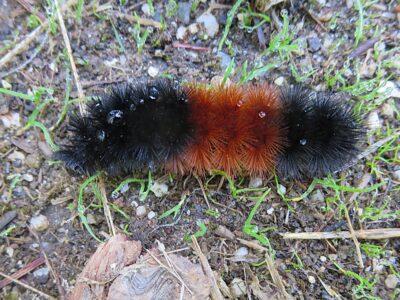
For those who live in places frequented by the woolly bear caterpillar, you may have heard that the width of its cinnamon-colored brown band can forecast the severity of the upcoming winter season. This has proven to be folklore, or legends passed down from generations which have little to do with reality.
However, this brown band can indicate the relative age of the caterpillar – the wider the width of this reddish-brown band, the older the caterpillar.
When a woolly bear is disturbed, it will often roll up into a ball. For some people, the bristles covering the two-inch long caterpillar’s body – called setae – can cause irritation to the skin, although many people handle them with no ill effects.
The woolly bear caterpillars, along with some other species, show up a lot in the places where I camp and fish in the fall. They, along with the cold nights and cool days, are a sure sign that summer is winding down and winter in the mountains is not too far away.
As I hike along gravel roads near the river, caterpillars seem to be forever crossing from one side of the road to the other. If there is vehicle traffic, sometimes I will move them to whatever side of the road they are heading toward to try to keep them out of harm’s way.
I may be one of the few people in the world who actually swerve to miss them as I am driving.
Woolly bears in the late fall will overwinter beneath leaves and logs on the forest floor. That is where something remarkable takes place:
Something Amazing Going On
When temperatures start to drop near freezing, woolly bears begin to produce a chemical called glycerol. This is a natural anti-freezing agent, and has actually been used in automobile antifreeze.
Glycerol stops crystals of ice from forming inside the cells of the woolly bear. Internal systems begin to shut down – first the caterpillar’s heart stops beating, followed by the gut, blood, then the rest of the body. When the warm temperatures of springtime arrive, the caterpillars thaw out, systems start back up, and the woolly bears begin moving around and feeding on most any vegetation that is available!
As the above Scripture states, God gives life to everything – and at times in some of the most extraordinary ways.
What a diverse and complex creation we live in.
And what an amazing Creator we have!
If you’re not sure how you can have your own personal relationship with the Creator of the universe, please see Got God?
Hope you have an amazing day today!
 Cosmos and the Patio Visitor
Leave a Reply